|
|
|
Kaizen - Continuous Improvement
|
|
 |
|
As pioneers in introduction of quality improvement projects, we offer our customers training and consultation services in Continuous Improvement techniques, which embody the lessons learned from over 300 projects in public and private organizations.
|
|
|
|
|
|
|
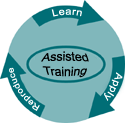
Our methodology is based on the Assisted Training Model, which combines the methods learned in the classroom with the immediate application thereof in performing improvement projects to solve real company problems, under the guidance of experienced consultants. |
|
|
|
|
|
This model which is summarized by the Learn-Apply-Reproduce cycle on the right, has the aim of creating a group of highly qualified individuals to solve problems and to make them pass on to other staff members the quality and productivity improvement and cost reduction techniques. |
|
|
|
|
|
The training comprises five modules, each corresponding to the stage of the improvement project. There is a suitable time interval between the modules to enable the trained team to perform the tasks assigned to each phase. By strongly emphasizing immediate action, this model ensures the short-term return of the investments made in training due to increased productivity and reduced costs. |
|
|
|
|
|
The five stages of the improvement project: |
|
|
|
|
|
|
1 |
Definition - identifying the opportunities for improvement and choosing the project according to feasibility and benefit criteria. Choosing the team to perform the project. Establishing the objectives.
|
|
|
|
|
|
|
2 |
Measurement - mapping the process, selecting the indicators and gathering the data. |
|
|
|
|
|
|
3 |
Analysis - Identifying the causes of the problems and ranking them in terms of seriousness. Validating the improvement objectives. |
|
|
|
|
|
4 |
Improvement - generating, selecting and implementing the improvement actions. |
|
|
|
|
|
5 |
Control - evaluating the results and documenting the process. Monitoring to ensure the improvements are maintained and developed. |
|
|
|
|
|
| |
|
|
|
|
|
|